Episode 8
- Location
- San Antonio, Texas
- Open to
- Remote, Hybrid, On-site

Satellite Communications Engineer | San Antonio, Texas
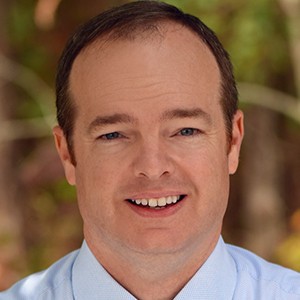
James Buckner is a satellite communications engineer in San Antonio, Texas, with over 20 years in the field. He has installed terminals on offshore oil rigs and built, managed, and upgraded satellite networks. His work has connected drilling rigs, offshore vessels, aircraft, and disaster recovery sites. He worked on one of the first in-flight Wi-Fi systems, and he has worked in Moscow, South Korea, Singapore, and Luxembourg.
In this episode, James explains what a satellite network does and why you can see Starlink at night. He tells how a box he was told he wouldn't need fixed the voice line on an offshore rig, and how an encryption project made calls sound better for reasons no one could fully explain. He also shares how one call to an old contact in Brewster, Washington, solved a problem in a couple of hours. James is looking for a solutions engineering or sales engineering role, and his skills carry over to network engineering.
About 30 years ago, James answered a newspaper ad in the Austin American-Statesman for a two-way radio technician. He had been a ham radio operator for a few years, and a manager took a chance on him. Soon he was building and programming satellite terminals. He started his career in Houston in the oil industry, riding helicopters and boats out to offshore rigs.
James was sent out by helicopter to fix a problem on an offshore rig. Before he left, he asked to take a certain box. He was told he wouldn't need it. Once he saw the site, he knew he did. The box came out on the next day's helicopter. He plugged it in, and the voice quality went from pops and hisses to sound as clear as a call on land.
A customer wanted their entire circuit encrypted from end to end. James had a tool that let him tap into a serial stream, and he used it to prove the encryptors worked. His boss then sent him out to install the remote end. He negotiated the outage with the customer, and his team brought it up. Afterward, the customer asked why their calls sounded better. No one knew for sure. James told them the honest answer: the team's best theory was that it had to do with the encryption and decryption algorithm. He called it a positive unintended consequence.
Early on, James learned to build bridges with vendors, salespeople, and customers. Years after a job in Brewster, Washington, he joined Panasonic and found they used the same teleport. He called, and the man who answered was the same person he had worked with on that first visit. A couple of months later, the teleport called him about a problem that might affect his network. James called a friend at the satellite provider, and within a couple of hours they had it fixed. He likes to take care of problems while they are small.
In 1998, James got a call telling him he was going to Moscow. He arrived about four months after the ruble fell and worked at Central Telegraph, about half a kilometer from the Kremlin. Around 2012 he worked in Geumsan, South Korea, a town known for growing ginseng. After joining SES in 2018, he moved to Singapore during the pandemic and later to Luxembourg. He met the same CEO when he started, again in Singapore over chili crab, and again in Luxembourg, three assignments on three continents in under five years.
James was setting up split-horizon DNS for his home lab. An AI chatbot told him he could do a certain step on Cloudflare. When he checked, he found it couldn't be done. He uses AI for research and coding, but he treats it as trust but verify. In his view, AI gets you about 80% of the way, and the last 20% takes your own work.
James Buckner (0:00)
In Texas, we have a saying: find a burr under the saddle, so to speak. And what that is, Liz Ryan with Human Workplace on LinkedIn, she mentions, well, what are the pain points? And a burr under the saddle is a pain point. So I like to sit down and speak with the customers and find out what they really need. I mean, the management may not have an idea, but I tell you, the operations and engineering people have an idea of what they are looking for, and I can just sit down with them as equals and say, okay, what do you need? Here's what we've got. Have you looked at this?
Toni (0:39)
A résumé turns years of work into a handful of bullet points. It shows what someone did, but it doesn't highlight how they think. I'm Toni Holcombe, and you're listening to Tell Me About a Time. The stories behind the résumés. Real people, real stories. Let's get them hired.
Toni (1:01)
All right, we have James in the studio with us today. James, why don't you go ahead and introduce yourself?
James Buckner (1:07)
Hi, my name is James Buckner, and for a little over two decades I've been working in the satellite communications industry, doing all sorts of things, from actually installing terminals on oil rigs, managing networks, building networks, upgrading networks, and even studying all the new technology that goes along with it, including automation and other things to help the job along. AI has become very, very interesting. I've even used it for coding and various other things. I will say this: just like anything else, use the right tool for the right job. And I've seen it happen where if you use the wrong tool, like AI for instance, you may not like the results you're going to receive. So there's so much that I've done over the years, and I'm glad to be able to speak with you about it.
Toni (2:09)
That's awesome. One thing that I have noticed as I do these episodes and these interviews with these candidates is that there's so much variety in what kind of talent is out there. You worked for Enron.
James Buckner (2:26)
I was there. Yeah.
Toni (2:28)
And if you're not familiar with Enron, go give it a little Google. And with that, you are well traveled. You've been to Korea, Moscow, Singapore, Brewster. Is that Bruce? Brewster. Is that right?
James Buckner (2:42)
Well, that's Brewster, Washington, up there on the east side of the Cascades. It's in the foothills of the Cascades. But yes. So I started my career in Houston in the oil industry. I actually rode helicopters and boats to rigs offshore. That was an amazing environment, amazing people to work with. And then one day in 1998, I received a phone call that said, "James, you're going to Moscow." And it was part of a project that I was already involved in. And so I actually was in Moscow in 1998, I'd say basically four months after the ruble fell.
And a side note, the office where I was located, if any of you are familiar with the Val Kilmer movie The Saint, right at the beginning there is what's called the Russian Parliament building. It was the Russian White House. And the building that he walks into was a hotel. I actually stayed at that hotel. So when I saw the movie, I'm like, "Wow." And yes, I was working in Central Telegraph, which is about half a kilometer from the Kremlin, and I was next door to the then second Moscow McDonald's. Yes. So I did not go to the first one on Pushkin Square, but I did go to the second Moscow McDonald's, which was right there. I would say it's probably the closest one to the Kremlin.
And then many years later, I'd say about 2012, I actually got to go to Korea. It was in a place called Geumsan, and that is in the central part of South Korea. It's basically Korea's Silicon Valley. Well, Daejeon is the city, but I was south of Daejeon, in Geumsan. And Geumsan is known as basically the world's capital for ginseng. I came up to the location and I asked the folks, I said, "What are you growing around here?" And they said, "Oh, we're growing ginseng." And I said, "Well, what's with the shades over here? What have you got all these shades for?" They said, "Well, the ginseng grows on the north side of the mountain, so to grow it on flat land, we have to put these shades up here." And so they grow the ginseng anywhere between one and six years. And there's even a ginseng festival in the town.
And then some years later, when I joined SES, I got to go to Singapore. I moved to Singapore right during the height of the pandemic, no less, and spent a couple of years there. And then I was in Europe. I was in Luxembourg for a couple of years. Singapore was an amazing place. I love the people, and whenever you hear about the food, yes, it was terrific. What Anthony Bourdain said about Singapore, he was so right. And being in Luxembourg, I had Germany, I had France, I had Belgium, all right there within 20, 30 minutes. Well, in the case of Germany, it was 45 minutes away. But it was wonderful to be there. And in all these travels, you learn the way people do things around the world. You learn about different cultures, and it really broadened my horizons.
Toni (6:13)
In what way?
James Buckner (6:14)
Well, the thing is that I read a lot when I was in school. I continued to read. I've been a big fan of history, and in the case of Singapore, I got to learn about Singapore and why it is the way it is, and how they were kicked out of the Malay Federation, and how basically 12 people had to build a country overnight.
Toni (6:42)
Wow.
James Buckner (6:43)
And with how it worked, it's just mind-blowing. It hasn't been done since. And then in Europe, the thing is that my maternal grandfather was an ambulance driver at Normandy. He was there after the D-Day invasion, and he made it all the way from Normandy to Innsbruck, Austria. So I was able to retrace some of his steps, and I also visited places that I had read about in books. I got to take in the architecture, and it was very interesting. For example, not many people know this, but the city of Luxembourg was founded in 963 AD. So in 1963 they celebrated a thousand years. And there is a church not too far away from the wall that was built, and there has been a church on that site ever since the city was founded. The church that's there was built in 1680, and it's Gothic style. It's small, but it's very beautiful, especially with the stained glass windows. So it was really nice to see all of this architecture and actually trace some of my roots.
Toni (8:01)
Very cool. Very cool. So you work with satellites, specifically networks for satellites. Can you give the listeners a really high-level explanation of what that means? Because when I think of networks, I think of computer networks.
James Buckner (8:17)
Yes. Yes. It could be. What I do, in a nutshell, is basically connect people using wires you can't see.
Toni (8:28)
Okay.
James Buckner (8:29)
Now, in my time I was aiming at things that were 22,300 miles up in orbit. And if you're familiar with Starlink, the Starlink satellites are much closer, 500 miles above the Earth's surface. Well, there's a range of them. And so basically we connect sites that you really can't connect with a physical wire, such as places out in the middle of nowhere. Think the Australian outback, or think about aircraft. I actually worked on one of the first systems where you were able to do in-flight Wi-Fi. And I did it with offshore vessels, drilling rigs, disaster recovery, where you need to get communications up in a very short amount of time. Basically, it was connecting people by aiming at objects in space.
Toni (9:27)
So I want to revisit something real quick. You said that Starlink is 500 feet above the surface.
James Buckner (9:34)
500 miles. 500 miles. Well, there's a range. There are different definitions of orbit. So for example, low Earth orbit, where Starlink and Amazon Leo and a bunch of other low Earth orbiting satellites operate, is roughly about 150 to 500 miles above the Earth, with a gap for occupied space stations. And then you have others, such as GPS, that operate at 5,000 miles above the Earth.
Toni (10:02)
Okay.
James Buckner (10:08)
So there are all sorts of orbits that we won't go into, but to give you an idea, most of the stuff I worked on was geostationary, and then later on I actually worked on stuff that's in what's called medium Earth orbit, which is 5,000 miles above the Earth.
Toni (10:28)
So if Starlink is only 500 miles above the Earth, but some of the other satellites are 5,000, is that why we can see Starlink in orbit at night?
James Buckner (10:40)
Yes, you can. Depending on the conditions, and depending on if the satellite is masked, you can actually see the satellite in orbit. Now, I'm pretty sure everyone is familiar with the Starlink train, where whenever there is a Starlink launch, you'll see a group of about 53 satellites. Basically it looks like a train of little bitty stars.
Toni (11:09)
Yeah.
James Buckner (11:10)
And yes, I think that's what a lot of people are familiar with. Now, visual astronomers are very concerned about the Starlink satellites, because astronomers will do what is called long exposure photography, and then they'll have streaks in the photos because of the orbiting satellites. Now, if you want to see geostationary satellites, you just have to aim your camera out at the geostationary belt and do a long exposure for about 30 to 45 minutes. And depending on where you're pointed in the sky, you'll be able to pick off the individual satellites. There are photos of that out there on the internet. But for Starlink, most of the time when you see them, it's usually going to be a train of satellites running in one direction. And they're operating in that orbit until those satellites can get into their proper orbital altitude.
Toni (12:12)
This is such a unique field. I assumed that there were people who managed the satellites, but I never put much thought into it before. What about it? How did you get hooked into this?
James Buckner (12:28)
Well, believe it or not, I answered a job ad in the Austin American-Statesman about 30 years ago.
Toni (12:36)
Okay.
James Buckner (12:37)
It was for a two-way radio technician. And there was a man who took a chance on me, because I had been a ham radio operator for a few years at the time. And the next thing I know, I'm building the terminals, programming the terminals. They even sent me out to rigs for certain tasks where you needed not only a technician's mindset, but an engineer's mindset. And I was sent out to one. I got to ride a helicopter.
Toni (13:10)
Yeah. Okay.
James Buckner (13:12)
And I got out to the one site, and I was told what the symptom was, and I said, "Well, let me take this box." They go, "No, you don't need it." I'm like, "I am going to need it." I get out there. I take a look, and I'm like, "Yes, I need this." And so the box came in on the helicopter the next day. I go ahead, get the box. I tell them, "Hey, give me a few moments." I plug it in, and the voice quality went from all sorts of pops and hisses to full-blown stereo quality, just like on land.
And we even have another story. We had this customer come to us and say, "Hey, we'd like to encrypt the entire circuit from end to end." And so they provided some encryptors. And it just so happened that about a week or so prior, I actually had a type of Wireshark device, which basically allowed me to tap and look at a serial stream, and I was able to prove to him, "Hey, these things work." You know what my thanks was for that?
Toni (14:24)
What's that?
James Buckner (14:26)
My boss sent me out there, and I had to put the remote end on. And sure enough, we got it going. I negotiated the outage. I got with my guys and said, "Okay, let's do this." And we fired it up. And the funny thing about it was, of course, there's always a before and after. And the greatest mystery for the company at that time was, after we put the encryption in, they would say, "Hey, how come the voice sounds better?" It's basically what I call an unintended consequence, but it's a positive unintended consequence.
And I had to tell them, because we honestly did not know why the voice was better. So I told him, look, we don't know why, but we have a working theory, and it has to do with something associated with the encryption and decryption algorithm. We don't know what it is exactly, but based on what we see, this seems to be about the best explanation. And for those of y'all that know Occam's razor, the simplest explanation is usually the correct one. And we figured that it was the right one because it was a simple explanation. We don't know, but based on the information we have at the time, this is probably the best explanation we have.
Toni (15:51)
Okay. All right. So it looks like you've always kind of been an individual contributor. Is that a true statement?
James Buckner (16:02)
That's pretty much a true statement. The problem is that I would go ahead and do my job, and you try to work for promotion opportunities or whatever, but you just don't see them. So what do you have to do? I just decided to get better at my craft.
Toni (16:22)
Yeah. And it looks like you had long tenures at most of your places of employment.
James Buckner (16:28)
Yeah. Most places I would be there five, six years. At SES, I was there for seven years. And this is a very interesting story, but I actually met the same CEO on three different continents. Because when I joined SES in 2018, I met him right there when I started. Then I met him in Singapore over chili crab. And then I met him again when I went to Luxembourg. I landed in Luxembourg basically about a week before my five-year anniversary. I don't think anyone else has done three assignments with the same company in less than five years, on three different continents, no less.
Toni (17:16)
Right. That makes you very, very unique.
James Buckner (17:21)
And it is.
Toni (17:23)
I can't imagine how many stamps you have in your passport.
James Buckner (17:27)
Well, the thing is, sadly, a lot of places are phasing out passport stamps. But I will say this: my previous passport has some stamps that I'm very proud of, because it covers my trips in Asia. And I'm also very proud of it because it was the only time my passport had a Singapore stamp, and those stamps were phased out, I think in 2023. Now it's all electronic. But I do know that if you talk with the folks at Amsterdam border patrol, they'll be happy to stamp your passport for you.
Toni (18:13)
So that's good to know. I will be asking if I ever get out.
James Buckner (18:17)
I only wish that I did have the passport stamps for France, but because I lived in Luxembourg and I was in the middle of the Schengen area, I really didn't have the stamps. Although I do have the one from Switzerland. So there's that. I'm real happy about that.
Toni (18:38)
All right. Very, very good. So what's next for you? What are you aiming for next?
James Buckner (18:45)
Well, I will say this. Elon Musk pretty much made geostationary satellite services almost obsolete, except for a few very specific applications. So I figured that this time I would like to broaden my horizons. I do have a lot of skills that carry over to network engineering. I do hope one day to pursue the Cisco Certified Internetwork Expert certification, also known as the doctorate of networking. So that is on the near horizon. But I was also thinking that I would like to get into either solutions engineering or sales engineering roles, because throughout my career I've always wanted to sit down with the customer, find out what they needed, and evaluate it from a technical aspect. Because I've usually found that there's always some sort of problem that they want to solve.
In Texas, we have a saying: find a burr under the saddle, so to speak. And what that is, of course, Liz Ryan with Human Workplace on LinkedIn, she mentions, well, what are the pain points? And a burr under the saddle is a pain point. So I like to sit down and speak with the customers and find out what they really need. I mean, the management may not have an idea, but I tell you, the operations and engineering people have an idea of what they are looking for, and I can just sit down with them as equals and say, okay, what do you need? Here's what we've got. Have you looked at this?
And sometimes that little "have you looked at this?" question can open up a whole new possibility. It opens up a whole new line. And I believe that if you're in a customer relationship, if you can go ahead and take a customer and turn them into a partner, next thing you know they become an advocate. And if you have a customer that's your advocate, you can't buy that advertising. You can't buy it. There's just such a tremendous upside to having a customer who's also an advocate for you.
Toni (20:55)
Yeah, that is always one of the best ways to get referrals and new business, through the reputation that you establish with your current client base. Is that something you've done before in the past?
James Buckner (21:08)
Well, the thing is that in the satellite industry, when I grew up in it, one thing I learned was be an architect and build a ton of bridges.
Toni (21:18)
Mhm.
James Buckner (21:19)
I mean, talk with vendors, talk with salespeople, not only in your company but also potential customers, everybody. Because one of the things that I've always operated under is make a lot of those bridges, because you never know when you're going to need them or when they will need you. And in this one case, I did some work up in Brewster, Washington, when I was working for one company. And then when I joined Panasonic years later, I found out they were using the Brewster Teleport as well. I gave them a call, and come to find out, the gentleman who answered the phone was the same gentleman that I worked with during that first visit. And he's like, "Man, I'm so glad to hear from you again." I go, "Yeah, well, it's good to hear from you, too."
And then about a couple of months later, I get a call from that teleport that says, "Hey, we have a problem. It might affect you." And they told me what the problem was. I'm like, "Don't worry about it. I'm going to make a phone call." And I called a friend of mine that worked at the satellite provider, and he's like, "Hey, James, what's going on?" And I told him what was happening. He's like, "Okay, who do I need to talk to?" We shared some information, and basically within a couple of hours we were able to take care of the problem. Because I also believe in taking care of problems when they're small, because if you let them fester, they're the ones that'll come and bite you later and become a real, real pain.
And this is something I've noticed, where in a lot of cases things are so metric-driven that unless you can measure it, it doesn't exist. And I'm like, well, wait a minute. I look at taking care of problems if they come up. If I have to involve a couple of people from different organizations and ultimately solve the problem as quickly as possible, that's fine. That's stuff that can't be captured in a ticket. And another thing that isn't really measured is customer aggravation. What are the pain points of the customer? Because at some point the aggravation is going to become too great, and you're going to lose the customer. And a lot of telecommunications companies and others may not have looked at their customer base and figured out, are we really creating the conditions where we can make sure that we keep these customers? A lot of companies are focused on customer acquisition, but when it comes to customer retention, they fall short for some reason, because the things that cause customers to leave may not be able to be measured.
Toni (24:08)
Mhm. Okay. So how long have you been looking for your next role?
James Buckner (24:17)
About nine months.
Toni (24:19)
Nine months. What's that process been like for you?
James Buckner (24:23)
Well, the thing is that the set of skills I have is very specialized. Initially I was going to try and find something in Europe. However, because I wasn't an EU citizen, that was a no-go. So I came back to Texas, back to the US, because I felt that the job market was better over here. And one of the things I've noticed is that there are a lot of jobs that I could do, but they require security clearance. No one wants to sponsor for clearance, because people want to hire people already with the dang clearance.
I was very fortunate to chat with a gentleman on LinkedIn. He reached out to me, and I learned more in 30 minutes. And you see all this stuff, and you're just like, well, this is exactly what I've been through. And so he said, "Well, why don't you try applying for a job with the federal government?" And I was already two steps ahead of him.
And so I've been able to go on interviews in some cases. I went through an initial phone screen with a recruiter and an initial interview with a hiring manager. They went great. And then you have five other interviews, and not one of those five even asked me about my satellite experience. And I kind of felt, did you actually read my résumé?
Toni (25:58)
Mhm.
James Buckner (25:59)
And I've been running into recruiters like that over time. There are some really good ones out there. I have an example of one. So I applied with this bunch out in Georgia. I was very familiar with them. I was very familiar with the parent company. I had two interviews, one with the recruiter, one with the hiring manager, and I heard nothing.
Toni (26:22)
Oh.
James Buckner (26:23)
And that was back in March. And then another recruiter reaches out to me a few months ago for the same position. I said, "Submit me and find out what happened." And they said, "Well, we really liked him, but he didn't have the sales experience." I mean, this is the problem with that. I have a lot of skills, but I have to find the right people to tell my story, because all I'm looking for is somebody who can recognize they've got a winning lottery ticket on their hands. My first hiring manager did, back in '97.
Toni (27:03)
Uh-huh.
James Buckner (27:03)
Like the manager who hired me in 2018, who sadly is no longer with us.
Toni (27:12)
Yeah.
James Buckner (27:13)
Yeah, it was rough. But the thing is that I know there are managers out there who can take a look at someone like me and realize there's a pot of gold here, and let's mine it.
And I've been on a few other interviews. Matter of fact, while I was in Luxembourg at the end of March, I was actually flown out to the company. Met them, great place and everything. And then they come back and they say, "Oh, we're not going to pick you." And I'm like, "What the heck happened?" And they told me, and I'm like, "Well, you didn't mention that in the job interview." They rejected me on one little thing. And I'm like, you know, I could have learned it. I mean, if that was your gatekeeping parameter, how come you didn't tell me this at the beginning of the process? I could have saved us a lot of trouble. The only thing I got out of that interview was some frequent flyer miles on KLM. So there's always an upside to something.
So what am I doing now? Well, basically trying to pick up a few consulting things here and there. But the other key thing is something I learned when I was between jobs after Enron: try to keep busy, and there's always something to do. If it's not doing work on a farm, if it's not resurrecting a 60-year-old tractor and bringing it back to life, there's always something that has to be done. And I've been keeping my mind busy. And on my LinkedIn, I've been making posts about things for a home lab, which is something I look forward to building.
So I did my research, and there's so much information out there, doing the searches and everything. And by the way, the AI helps. But there is something very important. Just like when the internet took off in 1996, with AI you have to be careful, because it's trust but verify, right? Because I've caught different AI chatbots actually lying to me, because what the chatbot says, and you go ahead and look at it, that's not right, because the chatbot may be dealing with old information. I actually caught that having to configure split-horizon DNS, and the AI says, "Oh, you could exercise this thing on Cloudflare." It's like, "No, you can't."
To me, the AI will get you there, but I'm a big believer in the 80/20 ratio, the Pareto ratio. It goes by different names, but basically I think that the AI in this instance will get you 80% of the way, but the other 20% is where you need to refine it. And I think a lot of people are finding that out about AI and the vibe coding and everything. It'll get you on the path, but it may not get you to the end.
Toni (30:38)
Yep. Yeah. Mhm. Very good. All right. Is there anything else that you want to cover before we end the show today?
James Buckner (30:46)
Well, I would like to say that when it comes to interviews, for companies or recruiters or whatever, can you please take the candidate into consideration? I don't have a problem with doing one or two interviews.
Toni (31:04)
Mhm.
James Buckner (31:05)
But I recently saw a job posting, and they listed their interview process, and I looked at it and I go, why is the CEO being involved in the hiring of an individual contributor?
Toni (31:22)
Mhm.
James Buckner (31:23)
And also, when it comes to a take-home assignment or whatnot, I'm sorry, but when I see that, I'm going to charge you my normal consulting rate. I don't believe in making someone work for free during part of the hiring process if you're not going to compensate the person for their knowledge.
Toni (31:47)
Mhm.
James Buckner (31:48)
And I've seen many things. I've talked with so many recruiters over the years, and sadly, I hate to say this, it's hard to find a good one and stick with them, especially in my line of work, because they just call for one position, but it's not their specialty. And I would just like for more people to hear this story, and hopefully it resonates with them, because I've been through it.
Do I think ageism is a problem? Well, I really don't know, because every employer is its own situation. I think that there are various mitigating factors, but I would sum it up as a failure of imagination. Maybe they've been burned one too many times. You never really know. So am I going to treat every rejection as ageism? No. I'm just treating every rejection as a no and time to move forward. All I'm looking for is a yes, and hopefully I can find it.