Episode 10
- Location
- Stevensville, Maryland
- Open to
- Remote, Hybrid, On-site

Customer Success Leader | Stevensville, Maryland
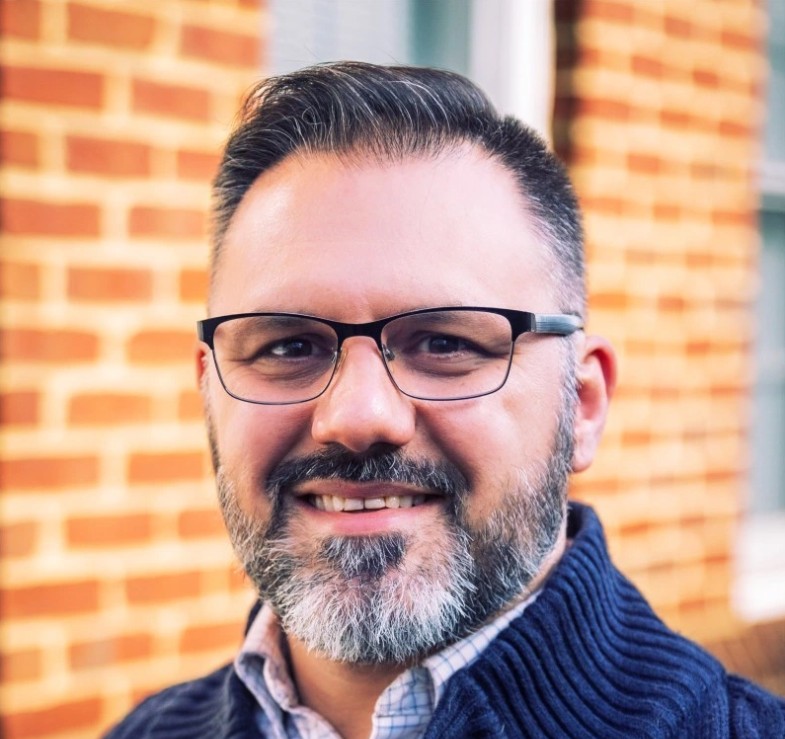
Kevin Knapp is a customer success leader in Stevensville, Maryland, with 20 years in B2B software. He started as a medic and surgical technician in the U.S. Army Reserves, where he served for 8 years. He moved from waiting tables into technical sales for computers, then into technical support at Comcast and MICROS, where he was promoted into the research and development team. He has worked with proprietary software, data systems, and information systems ever since, including several years at CallTrackingMetrics. He estimates he has learned around 40 applications in depth and over 100 overall.
In this episode, Kevin talks about a customer who called for help from a pay phone, why he stopped opening with an apology, and what a Chris Voss course taught him about people who repeat themselves. He shares how one meeting on impostor syndrome changed how he saw his own work. He walks a customer through software he had never seen. And he tells how he handled a hard call on a city government security project.
Kevin is the founder of MythologIQ Labs, which builds tools to help people use AI responsibly, and is a listed maintainer on Microsoft's Agent Governance Toolkit. He has also been lead product engineer at Bicameral AI, which is slowing development. He is looking for a full-time role with a normal work-life balance.
At MICROS, a customer called because their point of sale system and back office system were down. Kevin asked them to check whether the tower had power. They said they couldn't, because they were at a pay phone. The power was out to the whole building, and the phones didn't work. Kevin told them gently that the system needed power too. The customer was under stress and just needed someone to walk through it with them. Kevin's lesson was that support is not always about technical skill. Sometimes showing up is half of it.
Kevin's early customer service training told him to apologize first. He followed the script with a frustrated customer, who said, "I don't want your apologies. I want you to fix the problem." Years later, he saw the point. Now he tells customers their problem is real and their frustration is valid, then says what he can do. He owns the issue until he fixes it or comes back with why he can't and what the next step is. A Chris Voss negotiation course added one more idea: people repeat themselves because they don't feel heard. He teaches this to technical teams he trains.
At CallTrackingMetrics, a weekly meeting called Google and Coffee covered impostor syndrome. The idea was that we only see other people's results, not their struggles, so we decide we are the impostor. That leads people to do just enough and not suggest new ideas. Kevin recognized this in himself and saw he was as capable as the people around him. He expected more of himself, the company expected more of him, and he delivered. His customers later reached out to support him, and one called another vendor her company used to recommend him.
While working for a cybersecurity tech broker, Kevin was on a call with a government agency customer, a sales rep, and a customer success rep from the software vendor. The customer wanted to schedule his own reports, and neither rep could figure out how. Kevin asked the customer to share his screen and walked him through it. He had never seen the software before. After learning enough software and data systems, he finds that interfaces share patterns, and trial and error within safe limits is a powerful tool.
Kevin owned the customer experience on a project to replace a city government's VPN security with a zero trust solution. The system would secure everything from Wi-Fi on ambulances to police dispatch. The vendor's solutions architect gave definitive answers that the customer then disproved with documentation. Kevin checked his read with his own solutions architect, then told the vendor's project manager, who was surprised. Together they set an escalation path, and they followed it to the end. The architect was replaced, and the new one fixed past problems and exceeded expectations. The project ended with glowing reviews.
Kevin Knapp (0:00)
But when I worked at MICROS point of sale systems, I had somebody call me because their point of sale system was down. Their back office system wasn't working, and they wanted to troubleshoot with me over the phone. And I said, "Okay, well, I need you to look at the tower and check and see if the power is on." And I swear I'm not making this up. It sounds like I am. They said, "I can't. I'm at a pay phone." And I said, "Why are you at a pay phone?" And they said, because the power is out to the building and the phones aren't working.
Toni (0:31)
A résumé turns years of work into a handful of bullet points. It shows what someone did, but it doesn't highlight how they think. I'm Toni Holcombe, and you're listening to Tell Me About a Time. The stories behind the résumés. Real people, real stories. Let's get them hired.
Toni (0:55)
All right, we have Kevin Knapp in the studio with us today. Kevin, why don't you go ahead and introduce yourself?
Kevin Knapp (1:00)
Hi. My name's Kevin Knapp. I am a customer service, customer experience professional by trade, specializing in technical sorts of things, ranging from cybersecurity to AI to proprietary data systems, et cetera. And right now I'm actively looking for the next step, which is why I'm here.
Toni (1:24)
Well, we're glad that you're here. Actually, we're so glad that you reached out. We kind of connected in a weird way over LinkedIn, right? You had a post that just absolutely exploded.
Kevin Knapp (1:35)
That's never happened to me before. It was one of those lightning in a bottle moments on LinkedIn where I just had an experience, so I wanted to share it. I found it a little bit of a humorous story in the telling, and the reaction was pretty jarring. There are some people with some really emotional responses, some negativity with their own personal experiences, or some positives where people were just being supportive. It was kind of mind-blowing, but it created a lot of opportunities, such as meeting you. So yeah.
Toni (2:12)
Yeah, it was really exciting. I was like, I've never had a comment get 11,000 impressions. I was like, okay, what is this?
Kevin Knapp (2:22)
Right.
Toni (2:24)
But none of that's relevant. It's just kind of fun to talk about. So I wanted to start on your experience with the US Army Reserves.
Kevin Knapp (2:34)
Yeah.
Toni (2:34)
I think that's really interesting, and it's kind of the start of your career. Can you take us off from there?
Kevin Knapp (2:40)
Sure. Yeah. So, like everyone coming out of high school, I knew exactly what I wanted to do. No, I had no idea. I knew that I wanted to help people. I had a feeling I might want to get into physical therapy or something of that nature, but wasn't quite sure, so I wasn't ready to dip my toes in. And I joined the Army because I figured that would be a great place for me. I joined as a medic and surgical technician.
That's kind of where a lot of my personal perspective on dealing with day-to-day problems started. As a medic, a surgical tech, the role is assess, prioritize, follow the steps, adapt when the steps don't fit. But you're focused on the person in front of you. Everything in that moment, you're focused on that individual in front of you. I had a really great time in the Army Reserves, which gave me an opportunity to do some college and try on a few different careers early on. But here I am today, after 8 years in the reserves. I kind of dove headfirst into technology.
Toni (3:55)
So now you're in tech. Can you tell us about that segue? How did you jump from service to tech?
Kevin Knapp (4:00)
Well, it's funny. I had a bunch of different jobs. I waited tables. I ended up in sales. After a while, I had a manager who hired me to do technical sales for computers. That was my first technical job. And she said, "If you can wait tables, you can handle customer service." And I said, "Haha, okay."
Toni (4:25)
Yeah.
Kevin Knapp (4:27)
And I mean, it's kind of true. She had a point. When you're waiting tables, you're dealing with a wide variety of people and a lot of varied situations. I wouldn't say it's death-defying feats of customer service by any means, but it definitely prepared me. And learning the technical stuff kind of came naturally. It's funny, my first question on my first day on the job was, what's a USB port? But back in 2000, or 1999 actually, I think that was a more valid question for somebody my age to have asked.
Toni (5:07)
Right.
Kevin Knapp (5:09)
I know what a USB port is now, by the way. But the transition there was really about teaching people about technology and learning it along the way. A lot of people back in 2000 didn't have computers in their homes. So a lot of people I interacted with, it was their first time ever having a computer. And it was a really rewarding experience to just be able to teach people. And then if they bought a computer from me, great.
Toni (5:40)
Uh-huh.
Kevin Knapp (5:41)
And they often did, which made my manager happy. The selling was never about selling. The selling was about solving people's problems. And so I didn't stick with sales for too long. When I had an opportunity to go from sales into technical support, which was a time when I was working for Comcast, I jumped on it as soon as the opportunity presented itself. Did well at that. Ended up at MICROS point of sale doing tech support there. Was promoted pretty quickly into their research and development team when an opportunity opened up, and I've just built on that from there.
I specialize in proprietary software systems, and I've moved into a variety of different systems that do many different tasks, where the end user could be extremely varied. But what I deal with is data systems, managing data. Information systems is probably the more technical area of expertise. And the people. It goes back to what I said, the loop: assess, prioritize, follow the steps, and adapt as you go.
Toni (6:56)
Mhm.
Kevin Knapp (6:57)
That essence of helping people and creating that relationship in the process is something that transitioned and transcended throughout. So it doesn't seem like a logical path, but I swear it actually feels like it.
Toni (7:17)
I think it makes sense.
Kevin Knapp (7:19)
But when I worked at MICROS point of sale systems, I had somebody call me because their point of sale system was down, their back office system wasn't working, and they wanted to troubleshoot with me over the phone. And I said, "Okay, well, I need you to look at the tower and check and see if the power is on." And I swear I'm not making this up. It sounds like I am. They said, "I can't. I'm at a pay phone." And I said, "Why are you at a pay phone?" And they said, because the power is out to the building and the phones aren't working.
Toni (7:51)
Oh dear.
Kevin Knapp (7:52)
Well, I mean, that was my response on the phone. I was just like, oh, how do I address this gently?
Toni (8:00)
Yeah. Yeah. It's like, how to break it to them.
Kevin Knapp (8:03)
Okay, I see. So it's funny, in the moment I was like, "I'm sorry the power is out. That must be frustrating. Unfortunately, the bad news is we need the power for our systems, too." And I just made it more technical. It's like, well, we don't have a battery backup for our system, so our system is going to depend on the power as well. It all worked out. But it's funny, because the reality is they were in a stressful situation, and their thought processes didn't take them where they needed to go.
And sometimes being a customer service agent or a support agent is not so much about the technical aspect. You don't have to have the technical acumen in every situation. Sometimes you don't even have to have the answer. Just being present to help them walk through the process is enough. And so I found that oftentimes a great solution is just showing up. That's half of it.
Toni (9:07)
Yeah, I agree. That was something that I took away from our preproduction call, that your approach to customer service is very empathetic, and it's very problem-solving driven, in a way that you just take the customer's problem or the challenge that they're facing and you own it for them. So this is one thing that they don't have to think about anymore. And it also de-escalates, I imagine, how the customer is feeling. So if they're very angry, and then somebody says, "Let me take care of this for you. I've got you," I imagine that probably creates a great deal of relief for them.
Kevin Knapp (9:52)
That's actually an interesting thing that goes against my early training on customer service.
Toni (10:00)
Interesting.
Kevin Knapp (10:01)
When I first started in customer service, when I transitioned from sales into customer service, the very early training, they would tell us the first thing you want to do is apologize to the customer. "I apologize for this problem. I apologize that you're having this experience." And I said it to a customer who was clearly frustrated. I followed to the letter exactly what I was supposed to say. There was a script, and I said, "Oh, I apologize for that. I'm sorry that you're having this problem." And the customer said, "I don't want your apologies. I want you to fix the problem."
And it didn't sink in until probably years later that it's so true. The customer couldn't care less if you apologize. You can empathize, but "I apologize" is almost dismissive. What I find has been so much more helpful to me, which is inherent to my nature anyway, is to say, "That is a real problem. You're justified in feeling the way that you're feeling. That's frustrating. Here's what I can do."
And then not only reassuring them that what they're feeling is valid, that their feelings are in fact real and valid, but letting them know that from this moment on, now that I'm aware of the issue, I'm going to work to resolve it. And I'm going to either fix it, or I'm going to come back to you and say I can't fix it, and this is why, and here's your next step. And simply being able to do that with customers, being able to own that interaction from start to finish, the de-escalation that you would expect to be necessary doesn't really end up being necessary at all. The de-escalation is "I hear you."
Toni (12:02)
Right.
Kevin Knapp (12:03)
And that's an interesting thing that I've kind of learned over time as well. Most recently, I took a class on negotiation.
Toni (12:14)
Oh.
Kevin Knapp (12:15)
Because I thought it would be interesting. And it's a rather famous FBI hostage negotiator.
Toni (12:22)
Is it Chris Voss? Did you take a Chris Voss class?
Kevin Knapp (12:25)
Yes, it is indeed.
Toni (12:26)
I love Chris Voss.
Kevin Knapp (12:28)
And the reason I love Chris Voss is very simply because he is more about listening and understanding and asking questions. I think the thing that I got most pointedly from his course was this one simple thing, which is when people repeat themselves, as they often do when they're upset...
Toni (12:50)
Mhm.
Kevin Knapp (12:51)
They repeat themselves not because they want to emphasize the point. They repeat themselves because they didn't feel like they were heard the first time.
Toni (13:01)
Mhm.
Kevin Knapp (13:02)
And the moment he put that into words for me, it just clicked. Everything else just kind of made sense to me at that point. And I repeat this when I teach people or train people, and have since, because I deal with technical people a lot who don't necessarily have all of the requisite people skills that I've accumulated over time. And that's one of the things that I emphasize to people right out of the gate. If you hear somebody repeat themselves, they don't feel like you heard them. So that empathetic active listening becomes so key in literally every interaction.
Toni (13:46)
What is something interesting that's happened in your career that, when you look back on it, you're like, you know what, that was really fun or interesting? Or maybe it was more along the lines of a pivotal moment or something.
Kevin Knapp (14:00)
Okay. Wow. Pivotal moment. There are a few, to be sure. I think my transition from sales into support obviously was a big deal. I try not to mention company names too much, because this isn't an advertisement for any of the companies I used to work for. But I did work for a period of time at a company called CallTrackingMetrics, and I mention them by name because they emphasized the importance of culture more actively than anywhere I had ever worked prior.
Toni (14:39)
Okay.
Kevin Knapp (14:40)
And I had this really cool experience. They were a marketing tech company, and so Google was very relevant, and we used to have these weekly meetings. Google and Coffee was the name of the meeting. And if the woman who hosted this, Jess, happens to see this video, I hope she knows how profound this one meeting was for me. It was on impostor syndrome.
Toni (15:12)
Okay.
Kevin Knapp (15:13)
And this concept, which I hadn't heard up to this point, the concept of impostor syndrome, essentially, for anybody who doesn't know, is that we don't see the struggles of the people around us. We only see the outward representation. So we see that the vice president of sales has hit all of their numbers. Everyone on their team has met their quota, is getting their commissions, et cetera. We don't see that their dog threw up on the kitchen floor this morning, their kid missed the bus and they had to drop them off at school, which is why they were a few minutes late getting into the office and didn't have their coffee that day. We don't see the struggles.
So the idea of impostor syndrome, then, is that because we don't see those struggles, we only see our own. We develop this sense of, I'm the impostor. I'm not as good as they are. I'm not as smart as they are. I'm not as capable or technical or empathetic as they are. It creates this false sense of, I'm less than, and I'm the impostor, and one day they're going to find me out.
And it's a really dangerous precedent to not address impostor syndrome within an organization, I think, because it creates this sense of flying under the radar, where I will do just enough so I don't get noticed, and I will do just enough so that I meet my goals, but I'm not going to take a chance. I'm not going to make a suggestion about how we should do something within the organization. I'm not going to submit a new idea for a new project, or stand up when I think something is being done improperly and we're not taking care of a customer the way they need to be taken care of, et cetera.
Toni (17:17)
Mhm.
Kevin Knapp (17:18)
And when I recognized that about myself, I started to realize that I was just as capable as everyone around me. And I didn't realize how much I had not recognized my capability prior to that. And it was really interesting, because I had this kind of career renaissance with CallTrackingMetrics, where I expected more from myself as a result, and they expected more from me as well, and I was able to deliver on that in a number of ways.
To the point where, and I love this, I ended up engaging so well with some of my customers. I'm really proud of this. When I eventually entered the job market, the first people to reach out to me with supportive messages were my customers. I had a customer of mine, very sweet, she operated a call center for one of my customers.
Toni (18:30)
Mhm.
Kevin Knapp (18:30)
Just such great people. And unfortunately, I couldn't even pursue it because of a non-compete agreement. But she had contacted another vendor that they did business with and told them that if they didn't hire me, she wasn't sure if she'd be doing business with them. And they called me, went through the process, and I was like, "I'm sorry, guys. I really appreciate it and everything, but I have to respect my non-compete, and I couldn't move forward with it." But it was just the sweetest thing. And I found myself on the job market again, and the same people immediately reached out and said, "If there's anything I can do."
Toni (19:10)
Yeah. She was willing to put another vendor relationship on the line for you. That speaks volumes.
Toni (19:23)
So I have a question about something. As I'm looking through your LinkedIn profile, there are one, two, three, four, five, six, seven, like a bunch of different places that you've worked over your career, which makes a lot of sense, because you don't want to just get stuck someplace. But my question is...
Kevin Knapp (19:42)
Mhm.
Toni (19:43)
How many different software applications do you know from your extensive experience?
Kevin Knapp (19:50)
That's a really difficult question. The reason is because every software application has modules within it, and then there are integrations with other applications. So a lot.
Toni (20:04)
Yeah.
Kevin Knapp (20:05)
At CallTrackingMetrics alone, I had to learn HubSpot, Salesforce, obviously the CallTrackingMetrics application, and any integrations that anybody had to connect to their API. I had to be versatile enough to understand or learn on the fly. So, gosh, it's probably conservatively around 40 or so different applications that I've had to learn intimately, but over a hundred different software applications overall.
But I think the interesting thing is that over a period of time, when you've learned enough about software and you've learned how data systems work, there are also commonalities with the way that user interfaces are built, et cetera. It becomes pretty intuitive, I think, just inherently.
The funny story, I won't go too in depth with it, but I was working for a cybersecurity company with a government agency that will go unnamed, and we were on the phone with a customer service rep and a sales rep for the cybersecurity software company. We were a middleware, a tech broker in between, and the customer was trying to figure out how to schedule reporting for himself.
Toni (21:35)
Okay.
Kevin Knapp (21:36)
And the sales rep and the customer success rep were both not able to answer his question. They weren't able to figure it out, and he was getting frustrated, and it seemed like it was a simple enough thing. And I just, on a whim, said, "Can you share your screen?"
Toni (21:54)
Uh-huh.
Kevin Knapp (21:55)
And so I walked him through it. And afterwards, the sales rep that I was supporting was like, "How have you trained on that?" I was like, "I've never seen that software before in my life." But it becomes intuitive. It becomes second nature. And it was funny, because I guess my boss heard about it, and he was like, "I can't believe you did that." I was like, well, I mean, what's the worst thing that could happen? I'd be like, oh, I can't figure it out. But no one else tried.
And that was the difference maker, I think. For the next couple weeks, every time we would talk, my boss would be like, "I still can't believe you did that." But I had never used that software, and I've never used it since. When you want to figure out how to do something, there's a certain freedom to being able to just try something and see what happens, within safe parameters. If you understand what the safe parameters are, then trial and error can be a pretty powerful tool.
Toni (22:55)
Yeah, I agree. And I think it's kind of silly that a lot of the job descriptions out there today are asking for extensive experience in this software application and that software application, but that may not always be necessary, especially if you have somebody on your team, or you make a hire, that understands how software works and where things go, the generalized way that software works. So, okay, tell me about what you're doing now, and what do you want to be doing next?
Kevin Knapp (23:31)
I've been engaged with a number of different startups, AI startups and otherwise. Over the past year and a half, I've been working with an ADHD coach. He is developing a platform specifically for people with ADHD to help them manage their day-to-day, specifically focusing on founders. It's been a great way to meet new people and engage, and we've become good friends over the course of time, doing some development work, doing some review work, UI/UX type of evaluations for him.
And then occasionally, because he's kind of a solo founder builder himself, he gives me access to his GitHub repositories and I'll go in and take a peek. I'll say, you're not doing this right, you should change this, that, and the other. And he'll make some adjustments on the best way to do things. But that's the best part of it, that we're able to bounce ideas off each other. He may have a different direction he wants to go, but I'm able to provide some insights that have helped him develop his system along the way.
That was actually how I met a founder at Bicameral, which is where I've been the lead product engineer. And Bicameral's thing is essentially, with AI writing software code, it's very good at writing code, but it's not very good at knowing what code to write in every situation. It still very much needs human guidance, human review. Human in the loop is an absolute necessity. But as of right now, our founder has decided that he wants to pursue his PhD and wants to slow development on that. So I'll still be involved, but I won't be developing 80 hours a week. I won't be staying up late at night working on it. In fact, I'm already pulling back to a couple hours a week, just to kind of review it.
So it leaves a pretty large gap in what I want to do right now. I definitely want to find full-time employment where I can have a normal work-life balance. Being the founder of my own company, MythologIQ Labs, has been a bit of a passion project. I started it with the intent to use AI to create solutions to help people in their day-to-day situations. The reality is there's a lot of software being built right now, especially with AI coding, but not a lot of it is being written well, governed well, and the outcomes, I would imagine, are mostly failing.
So another thing I've been working on is actually a software development life cycle type of application to help myself along. In that process, through a connection I made on a Reddit thread, of all things, I became involved with Microsoft's Agent Governance Toolkit.
Toni (26:42)
Oh yeah, I remember that.
Kevin Knapp (26:43)
Yeah. Yeah. And so I'm actually a listed maintainer on that right now.
Toni (26:48)
Okay.
Kevin Knapp (26:48)
But that was a very cool experience, and it got me interested in what I can do with Microsoft. So I applied and was accepted as a Microsoft Cloud AI partner with MythologIQ Labs, and I've been working on fulfilling that obligation with them as well. So that software development life cycle governance application is something I've been building on the side, in the wee hours of the morning, for several months now.
Toni (27:18)
All right.
Kevin Knapp (27:19)
Yep. But I love it. There's a lot of opportunity to build, a lot of opportunity to do things with AI, but I think doing it responsibly is something that we all just need to be very aware of. And so I'm doing my part to try and make that more responsible. Make tools that help people be more responsible with the way that they use AI. And so that's kind of become the MythologIQ Labs mission at this point.
Toni (27:49)
Very good. So two more questions before we stop recording.
Kevin Knapp (27:52)
Sure.
Toni (27:53)
The first one is an observation paired with a question. I could see you in a leadership role very easily. You're very empathetic, you're very customer service driven, you're also very smart, and you think about problems in a way that makes a lot of sense for a leadership role. Can you tell me about a time where you were in a leadership position, either professionally or personally, where you had to make a hard decision?
Kevin Knapp (28:18)
You know, I've got a couple thoughts, but when it comes to making hard decisions, I think there's really one that kind of stands out. I was working for the cybersecurity tech broker, working with a local government, and they were doing a major replacement of basically their virtual private network security. They were replacing it with a zero trust solution. And as part of these projects, there are a lot of technical resources involved. As a tech broker, we weren't responsible for the software delivery or any of the actual technical delivery. But one of the great things about the company where I was working is that they really made it their mission to elevate everything. And that's why they brought me on in the first place, to elevate the customer experience.
So that was my focus. What is the customer experience? It can be ambiguous or not, but I went into the role knowing that I was going to own the customer experience for the delivery of this particular software. But there's a whole team that exists with the software company as well. And the professional services engineer, the solutions architect that was assigned, was not instilling confidence. There were a couple occasions where a challenged ego led to some uncomfortable conversations on the call, where the customer would challenge an idea, and the solutions architect's ego would prompt him to respond with a definitive answer, and then the customer would immediately bring up documentation to prove him wrong.
It was one of those situations where we watched the train wreck probably a little bit longer than we should. There was an air of, well, we just have to make it work. We're delivering for the customer. We just have to make it work. And it was one of those situations where you never want to put somebody in a bad situation, but the person that was assigned just wasn't getting the job done, and he was making the customer unhappy, and it was not looking good on any of us.
So at that point, I reached out to my solutions architect, who was engaged, and I just wanted to make sure. I was like, am I reading this right? And he assured me that from a technical aspect, the guy was not living up to expectations. And so that's when I reached out to the project manager, and I said, "This is a tough conversation to have, and I really want to make sure that I get it right. So just bear with me. I want to make sure that I'm stating this properly. I'm not trying to manipulate anything at all. I just want to be honest with you, but I can tell the customer's not happy." And there was genuine surprise on the other end.
And so my suspicions were correct, that internally they were relying on the feedback of the architect to determine how well things were progressing, because he was engaged in meetings that the project manager wasn't. So he wasn't fully aware of it. And so we talked, and we set forth an escalation path. We said, "At this point, this is where we get him more help, which I think is now. This is the point where we say the help isn't enough, we need more help. And this is the point where we say we can't work with this guy anymore. We have to figure out another solution."
Unfortunately, we ended up having to follow that all the way to fruition. We got to a point where we had to gracefully remove him from the project, which required numerous conversations with people in my leadership and his leadership, back and forth, to switch to a new guy. We ended up getting this new solutions architect who, day one, was an absolute night and day difference.
And from the customer standpoint, I kept telling them, "Look, I'm working on this. I'm going to make it better. Please bear with me. I know it's a struggle." And I was using my solutions architect to supplement in a way that we weren't supposed to, to make sure that we were delivering for the customer, until we finally got to a point where we were able to bring this other guy in. And this new architect coming in was not only able to remediate past problems, but he exceeded all expectations. Their expectations were low at that point anyway, but he exceeded all expectations. At the end of it, when they were asked how the project went, it was nothing but glowing reviews.
Toni (33:39)
Oh, yay.
Kevin Knapp (33:40)
And it was a city government, and this security was basically going to be the backbone of all of their internet-connected devices. I'm talking about Wi-Fi on ambulances, police dispatch, anything and everything you could possibly imagine, all being secured by this system. So it was extremely important that we not only make them happy, but also get it right.
Toni (34:12)
Right.
Kevin Knapp (34:14)
And so pulling in more resources when needed was absolutely necessary. But I think the tough decision was to take this guy, who was a really nice guy by all accounts, but just wasn't the right fit for that customer, and to have the tough conversation with my counterpart at a different organization and say, we can do this together, but we need to do something.
Toni (34:37)
So there are a lot of people out there looking for work right now. What advice would you have for them?
Kevin Knapp (34:45)
Man, you know what? It goes back to a LinkedIn post that I've been contemplating and haven't posted. I guess I'll give you a preview. Maybe I'll post it, maybe I won't. But it's that the perfect fit, if it does exist, the perfect job fit, all that buys you is a lottery ticket. If you're the perfect fit, that just means you're up for consideration amongst all the other perfect fits. My advice for anybody seeking jobs is leverage your connections.
Toni (35:19)
Mhm.
Kevin Knapp (35:20)
Relationships matter. One of the things that I loved about the concept of the Tell Me About a Time podcast is that in this world of AI applying to hundreds of positions a day, AI screening applicants, which is all viable, I understand why it happens, AI performing various tasks, writing résumés, writing cover letters. We know it's happening. Even if some people want to pretend they don't use AI to write their résumé, at some point they've probably done it. It's a good use of the application. And you still have to make sure that it's producing good copy.
But in the midst of all of that, the podcast here, and other things that I've experienced like it, is really taking that human element and elevating it. And that's really been my focus with everything that I've done with AI. I want to use AI as a tool. It's not a replacement for human beings. It never will be a replacement for human beings. And in times like these, as we're transitioning to a world where AI is being used more and more prevalently, it's really refreshing to have those moments where human connection becomes the obvious best choice.
Toni (36:49)
Very cool. Well, I want to thank you very much for joining us on the show. "Us," like there's anybody else but me. Thanks for coming on my show.
Kevin Knapp (36:57)
Thank you. We can pretend you've got a whole production crew. It's fine. I won't tell anybody.