Episode 7
- Location
- Princeton, New Jersey
- Open to
- Remote, Hybrid, On-site

Strategic Marketer | Princeton, New Jersey
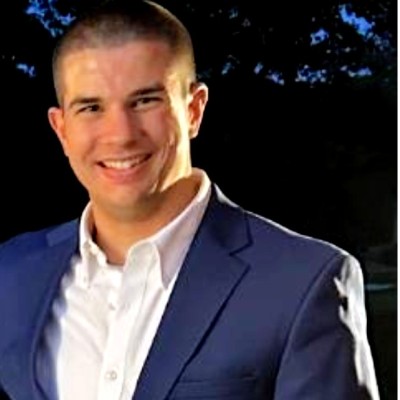
Sean Griffin is a strategic marketer in Princeton, New Jersey, with six years across sports, media, entertainment, and B2B tech. He started as an associate producer at ABC News Audio, where he spent three and a half years. He then moved into marketing at Endeavor Streaming, working with decision makers at sports leagues, teams, agencies, and media broadcasters across North America, Europe, the Middle East, APAC, and Latin America.
In this episode, Sean talks about the pop quiz at his first job interview, making the final two for a role at ESPN, and the LinkedIn message that got him hired at Endeavor Streaming within a few weeks. He also tells how a case study for the world arm wrestling championships taught him to speak up sooner and lead with the business outcome. Since a company restructuring in late 2023, Sean has done digital marketing consulting for clients in sports, fitness and wellness, and property management. He is looking for a role in integrated digital marketing, brand marketing, or partnerships, ideally in sports media or sports tech.
Sean's first job after Rutgers came through his journalism professor, who forwarded an opening for associate producers at ABC News. About two months after he applied, the manager at ABC News Audio called. Sean met him and the executive vice president of programming in person. They also gave him a general knowledge test, with questions like how many US senators there are and how long their terms run. Sean missed only two questions. The hiring manager told him no one had answered that many before.
At 16 or 17, Sean told his guidance counselor he wanted to study broadcasting. She warned him it was hard to break in and paid little at the start. He took that as fuel. At Rutgers, he joined the student radio station right away and called women's basketball, men's basketball, and football games.
In late 2021, Sean applied for a brand marketing coordinator role at ESPN. He had connected with the senior director of brand marketing a month before and let them know he applied. He went through four rounds of interviews and made the final two, but did not get the offer. The recruiter called before Christmas to tell him ESPN can get 500 to over 1,000 applicants for one job. He still keeps in touch with two people from that process.
In early 2022, the CMO at Endeavor Streaming posted on LinkedIn that she was hiring a marketing coordinator. Sean liked the post and sent her a direct message. She replied the next day with the job posting, which fast-tracked him. He met HR two days later, met the CMO about a week after that, and then gave a final presentation. He had the offer within a few weeks. Later, the CMO told him she rarely checks LinkedIn and happened to see his message at the right moment.
For his final Endeavor Streaming presentation, Sean built a marketing strategy for UFC Fight Pass, the UFC's direct-to-consumer streaming service. He cut a sizzle video from 30 years of UFC highlights and a second video on the reality series The Ultimate Fighter. He paired them with channels, tactics, and a media mix for internal and external promotion. He built the story around the underdog, for viewers who feel overlooked.
At Endeavor Streaming, Sean drafted the company's first external client case study. The client was a content aggregator that held streaming rights to the world arm wrestling championships and the World's Strongest Man competition. After two drafts, the senior product marketing manager told him the writing was strong but the business takeaway was unclear for sales. Sean admitted he was stuck and suggested going back to the client's senior director of partnerships to verify facts and get his view of the core outcome. The final draft was well received by the CMO and the client. The go-to-market campaign that followed, across paid search, email and CRM, and social media, brought a 10.5% increase in qualified leads. His takeaway was to speak up early, before a small problem compounds, and to start with the business outcome.
Sean Griffin (0:00)
...was on LinkedIn and I was browsing through my profile and I saw your message come across." So I really do believe that it was just a work of timing, and fortunately it just worked out for me.
Toni (0:14)
A little bit of luck and a lot of courage, because that seems to be your theme. You send a message, you follow up, you just reach out, because what do you have to lose, right?
Sean Griffin (0:28)
Exactly. Exactly.
Toni (0:28)
And I think that really reflects on your showing up authentically for authentic connections.
Sean Griffin (0:36)
Oh, thank you. Thank you, Toni, for sharing that. It's funny because I haven't always been this way.
Toni (0:42)
A résumé turns years of work into a handful of bullet points. It shows what someone did, but it doesn't highlight how they think. I'm Toni Holcombe, and you're listening to Tell Me About a Time. The stories behind the résumés. Real people, real stories. Let's get them hired.
Toni (1:04)
Today we have Sean in the studio with us. Sean, why don't you go ahead and introduce yourself?
Sean Griffin (1:09)
Hi, Toni. Thank you so much for having me on your show. I really appreciate it. I am a strategic marketer with over six years of experience where I have worked across sports, media, entertainment, and business-to-business tech organizations, helping them solve audience growth and revenue challenges through integrated marketing, digital marketing strategy, and partnerships.
Toni (1:30)
So you said something there that I really wanted to go back and revisit. Growth something. What was that?
Sean Griffin (1:37)
So that was audience growth. Audience growth and revenue generation.
Toni (1:42)
Yeah. So what does that mean?
Sean Griffin (1:46)
So beyond the vanity metrics of just looking at engagements and follower numbers and number of impressions, it's really about, I think, more so retaining audience. I think that has really become very important, especially in marketing, because a lot of the way that you acquire new audiences actually has to do with your existing audience. So if you're able to create a campaign that is able to bring a first-time audience, consumer, user, whoever it may happen to be, back more than once, then it gives you the chance to inorganically grow that new audience even more, because then your brand or company spreads by word of mouth. And that could be one of, if not the best, marketing channels that you could potentially have at your fingertips, and that I think a lot of companies should really explore and should really look at.
Toni (2:44)
Okay. So I guess my question was more related to what kinds of audiences? What was your target there?
Sean Griffin (2:50)
Yeah. So in my career I've had the chance to work with multiple media organizations, including ABC News, where I was there for three and a half years. And then when I was at Endeavor Streaming, it was really more so focusing on the key decision makers at high-profile sports leagues, teams, companies, as well as agencies that worked with content creators, and looking at media broadcasters. And that was more so looking holistically on a global scale. So not just focusing on the North American markets, but really looking at the European markets, the Middle Eastern market, APAC, Latin America, and just finding ways to drive authentic connection and engagement with our respective audiences.
Toni (3:36)
I love that, the authentic engagement, because that is something that is not easy to achieve. But before we go into that, I want to touch back on something. You said that you worked for ABC.
Sean Griffin (3:49)
I did. Yes. That was actually my first job post college. I was extremely fortunate to end up there. And how I got that role was actually in late 2018. So I graduated from Rutgers University in the spring of 2018. So maybe February or March, somewhere around that time frame, the senior professor of journalism, who actually oversees the internship program and really has served as a key mentor for me and for countless others who went through the journalism program at Rutgers, had actually sent out an email to all of the graduating seniors saying, "Hey, I just received an email from so-and-so, who is the associate content integration manager at ABC News. They're looking for associate producers. If anybody's interested, feel free to reach out to me with your name and résumé, and I'll be sure to forward it off to him."
So I had actually reached out to him, said that I was interested. And I don't believe I heard back for about a good month and a half, two months. And then all of a sudden, one random day out of the blue, this was maybe late May of 2018, so about a week or so after I had graduated, I received a call from the manager at ABC News Audio.
We had a great conversation. He invited me to come into their office, and so I had the chance to actually go into the office, have a face-to-face conversation with him, and met with the executive vice president of programming at ABC News. They also gave me a test too, which was actually really interesting. They gave me a test asking me basic questions like how many US senators are there? What are their terms? And what was really great about that experience, actually, Toni, was when I had completed the test, I think there were only two questions on that test that I genuinely did not have an answer for.
And I could tell that the hiring manager was very impressed. He was like, "Wow, we've never had somebody answer this many questions on this test. This is just basic general knowledge, to see how much you know." I guess it was very clear right away that I really stood out in a positive way in terms of the amount of knowledge, and just being able to showcase just how naturally curious I am.
Toni (6:09)
I like naturally curious. I don't think I have ever shown up to a job interview and had a pop quiz.
Sean Griffin (6:16)
Yeah.
Toni (6:18)
Wow. So I can see where that would kind of make sense, where they would ask you about how much you know about ABC and stuff, but I would never have expected questions related to senators and how long their terms are and all that other stuff.
Sean Griffin (6:32)
Yeah.
Toni (6:34)
So if you look back, what did you want to be when you grew up? If you're a 10-year-old you, what did you want to be?
Sean Griffin (6:44)
Well, I am certainly glad that you asked that question, Toni. So when I was 10 years old, the 10-year-old me used to spend his summers playing outside with my younger brother. We used to play baseball and Wiffle ball and basketball and flag football. And I knew that athletically speaking, my brother was the better athlete than I was growing up, and that I didn't really have that natural athletic ability. But what I really became interested in and fascinated by was just watching sports broadcasts and watching my favorite team growing up, the New York Yankees.
And I guess once I really started to follow them, that was really where my interest peaked, at 10, 11 years old, and I said, "Wow, this guy who's broadcasting the Yankees gets to do this and gets paid to do it. That sounds like a really, really cool job." So sometimes I would even be outside and I would be practicing my play-by-play. So that was really where the dream of going into sports broadcasting originated from.
And so when I was looking to go to college, it was interesting, because at the end of my junior year of high school, I sat down with my guidance counselor and she was asking me about my plans in terms of where I wanted to go to school. And I was looking primarily at schools that had great broadcasting programs, that either had a TV or a radio station that I could get involved with right away. So I had shared the list of schools, and I had really narrowed it down to five specific schools. And it was interesting because she said to me, "Well, you know, that's a great idea, but it's so tough to break in, and when you first start, you're barely making any money." And it almost seemed like in a way she was trying to discourage me, at 16, 17 years old, from really pursuing my dream.
And so that was really the first encounter that I had with somebody not necessarily fully believing in me and saying you shouldn't do it. But I have been a very ambitious person from a young age, and I am somebody who unfortunately has been underestimated a lot throughout my life. So I kind of used that as fuel to say, you know what, I'm going to show you that I'm going to go after my dreams and that I'm going to persist.
And so when I went to Rutgers, I knew right away that I wanted to join the student radio station. I got involved right away with that. I had the chance to broadcast the Rutgers women's basketball team as well as the men's basketball team, football. And so it was great because it allowed me to touch the dream without having so much pressure on myself, because obviously I wasn't getting paid to do it per se. But it was really great experience. It was really great exposure for me, and I really got to live out that dream in a way.
Toni (9:41)
That is fantastic. I was going to say, you could probably look at your local high school teams, your local high school, to see if they need a broadcaster for track or soccer or something similar, just to get a little extra practice, if that was something that you were still interested in pursuing. So what was your biggest takeaway from your time at ABC?
Sean Griffin (10:05)
Yeah. So I would say my biggest takeaway was just the importance of building, again using the word authentic, genuine, authentic relationships. Whether that was internally with the teams that I was a part of, whether that was with my direct supervisor and the senior executives, or whether that was with the different ABC stations that I had the chance to manage relationships with.
And I think a lot of that authenticity really does come down to just being unapologetically who you are. And I think just really valuing and having clear communication and being aligned on the necessary goals that you have for each other, and just making sure that the expectations are clear between yourself and whoever it is that you may be working with or for. So I would say that that was really the biggest lesson that I took away from my three and a half years there.
Toni (11:01)
Okay. What was your next role? Can you describe what that transition was like?
Sean Griffin (11:08)
Yeah. So when I joined ABC News Audio, it was great, and it really was a great stepping stone for me. It was really a great experience. And really around mid to late 2019, right before the COVID pandemic, I was also at the same time going back to graduate school at Rutgers, where I graduated from the sports business program there.
And I was really evaluating, while I was going through that program, what the next step in my career would look like. And I was really ready for the next challenge, and I was really ready to spread my wings and look at different opportunities, not just in broadcast media and production. I was looking for something a little bit more challenging. And so I sat down and I really evaluated and said, you know what, I have a lot of transferable skills related to my creative storytelling ability, my content creation. What would be a good industry that I could transition to? And I landed on marketing, because I feel that a lot of marketing is involved with building those audience connections and using stories to sell different products or services.
And so from early 2020 was when I started making the transition into marketing. And I was trying to do this during the height of COVID, which was not easy at all by any means, especially with a lot of companies during that time having hiring freezes. So unfortunately, I didn't really hear a whole lot.
And then in late 2021, again, this is all still happening while I'm at ABC News, there was an internal position at ESPN that had opened up. It was a brand marketing coordinator role. So I decided to apply for it. And what was funny enough was that I had actually connected with the senior director of brand marketing about a month or so before this job had been posted. So I had reached out to them and I had said, "Hey, just want to let you know that I submitted my application for this role. Would love the opportunity to be considered for it."
And so they actually did get right back to me. I went through, I think, four rounds of interviews, got to meet the entire team. It came down to me and one other person. And unfortunately, I did not get the role. But I did get a call back from that recruiter a couple of days before Christmas, and she said to me, "Hey, listen. Keep your head up. You're going to get the right opportunity soon enough. Put it into perspective. We get 500, sometimes even over a thousand people applying for one job at ESPN. For you to get into the final two out of that massive number of people, that's not a small feat in and of itself." And so I was like, okay.
So that was a great learning experience, and I actually still have kept in contact with two of the people who I had gone through that interview process with. So now fast forward to early 2022. I saw the chief marketing officer at Endeavor Streaming share a post on LinkedIn saying that she was looking to hire a marketing coordinator.
So I liked her post, and then I sent her a direct message on LinkedIn just introducing myself, saying that I would love the opportunity to connect and to learn more about it. And she actually got back to me, I want to say the next day, and she shared the job posting with me, which then helped me get fast-tracked through the interview process. So I met with the HR manager two days later. I then got to meet with her for the very first time about a week or so later, and then I had a final presentation with her and with the senior marketing manager, which I completely knocked out of the park.
And so I was extremely fortunate to get that offer within a few weeks after reaching out to her. And just to put a bow on the entire story, within the first couple months after I joined Endeavor Streaming, the CMO said to me, "Hey, you actually have really good timing in terms of reaching out to me, because I rarely check LinkedIn, but you just happened to catch me at just the right time when I was on LinkedIn and I was browsing through my profile and I saw your message come across." So I really do believe that it was just a work of timing, and fortunately it just worked out for me.
Toni (15:31)
A little bit of luck and a lot of courage, because that seems to be your theme. You send a message, you follow up, you just reach out, because what do you have to lose, right?
Sean Griffin (15:45)
Exactly. Exactly.
Toni (15:47)
And I think that really reflects on your showing up authentically for authentic connections.
Sean Griffin (15:54)
Oh, thank you. Thank you, Toni, for sharing that. It's funny because I haven't always been this way, but I think over the past six-plus years in my career, I really have evolved and have really become more comfortable with taking risks, because like you said, what's the worst thing that can happen? They either say no or they don't answer you. Okay. Well, then at least I tried, and at least I'm not sitting back with the thought of, well, what if? What if I could have taken my shot? What if that was the right door that I was looking for to open?
Toni (16:27)
Yeah. What was the presentation like that you had to put together for Endeavor?
Sean Griffin (16:33)
Yes. So the final presentation that I had to put together for them was a complete marketing strategy around marketing the Ultimate Fighting Championship, or the UFC's, direct-to-consumer streaming service at the time, UFC Fight Pass. So I literally got creative, thought out of the box, and I put together two highlight videos. One of them is a sizzle video taking some of the best moments that have happened throughout the 30-plus-year history of the UFC and splicing that all up into an opening video that I shared with them.
And then I also got into sharing the different tactics and the different marketing channels and the different media mixes that I would incorporate to promote the UFC Fight Pass service, both externally as well as internally within the company. Then I put together another video highlighting the reality series that the UFC still has, which is called The Ultimate Fighter, and just looking at those who are trying to earn a UFC contract and the journey that they go through.
I did all this with the intent to showcase my creative storytelling abilities, and I think also to really convey the messages that I think really resonate with a wider audience, in terms of those who have that underdog mentality, those who think that they're overlooked. And I felt that those themes, and really pulling them together and really hitting at the emotions of the intended target audience, would make them more likely to purchase the UFC Fight Pass product, or to become a consumer of it, or to engage with the content itself.
Toni (18:19)
Okay. If you look back throughout your entire career, what's something that stands out to you?
Sean Griffin (18:28)
Yeah, I would say for me it really has just been not being afraid to raise my hand, and really putting myself in the right place at the right time to challenge myself and to grow professionally. And I think an example of that, Toni, was actually I was part of Endeavor Streaming's first external client case study. And so we were working with a third-party content aggregator as the client, who actually owned the exclusive streaming rights for the world arm wrestling championships, which is a thing. I'd never heard of it before prior to that.
Toni (19:05)
Yeah.
Sean Griffin (19:07)
So they owned the rights to that, and then they also owned the rights to the World's Strongest Man competition. So I had the chance to be a part of the entire project, from the kickoff through the launch, and both of the internal stakeholders who I was working with felt comfortable enough in allowing me to draft a case study. It was really meant to be used as a tool to generate new conversations for the business, and also to support sales in their ongoing active conversations.
So within a week, I had submitted two drafts to the senior product marketing manager. And during a one-on-one conversation that we had, she shared with me that while the writing overall was strong, I was having a very difficult time really conveying what the key business takeaway and theme should be for sales to be able to leverage it in the conversations that they were having.
So I shared with her that I was indeed having a very difficult time really connecting it back to the core business outcome. I wish I could have spoken up, looking back now, hindsight being 20/20, but during the time I didn't really speak up like I should have. But I proactively suggested that we reach back out to the senior client director of partnerships, to allow him to verify the key information that we had included in the case study, as well as to get his take on what the core business outcome would be.
And that was extremely successful in allowing me to then narrow down on the core business outcome and present a final draft of the case study that was well received by both Endeavor Streaming's chief marketing officer as well as the senior client executive that we were working with. And as a result of then launching a go-to-market campaign, leveraging Endeavor Streaming's paid search campaigns, email and CRM marketing, and social media marketing, we saw a 10.5% increase in the number of qualified leads coming in for the commercial team that we were working with.
Toni (21:15)
That's phenomenal, because requirements gathering, that's something that I've been working on throughout pretty much my entire career, because sometimes somebody says X and they mean Y, and sometimes somebody has a vision for something but they don't exactly share that with you. So there's always these little bumps in the road. You fall down and pick yourself back up, and you just keep moving forward.
Sean Griffin (21:39)
Absolutely. Yes. And I would even add to that, Toni, that I think the biggest takeaway that I took from that experience itself was to really speak up initially, and to ensure that a small problem doesn't then have a snowball effect where it builds and compounds into a much bigger issue.
And I think also it's very important as well to lead with what the business outcome is, whenever you're creating a marketing campaign or whether you're creating some type of material that would be used to influence a positive outcome for the business. It's very important to be sure that you have it centered around what exactly the core business objective is before then diving into the weeds of actually putting the campaigns together. So it really taught me the importance of thinking strategy first, execution second.
Toni (22:44)
So you used a very interesting word, and I'm sorry if I'm going to put you on the spot here. You said learn to speak up. What about that situation made it feel like you had to speak up?
Sean Griffin (23:04)
Yeah. So I know that on the team that I was working on, we were a small but mighty team of six individuals. And so I think it's very important for communication, and facilitating that open communication and dialogue within the team, I think is very key to everybody's success. And so I think that's really where, from that particular experience, I learned the importance of speaking up right away, despite whatever sort of reservations or feelings you may have. Whether that is you're not so sure if you're going to be bothering the other person, or whether you think they already have too much on their plate, and you kind of have this superhero complex where you think you're able to take on the entire challenge yourself without any help.
But what I've learned is that actually speaking up and asking for help opens you up to more ideas, and opens you up to even newer ideas, things that you may not even have thought of or considered before. And I think that really is to the great benefit of not just the individual, but of the entire team as well.
Toni (24:22)
I agree. And to add to that, whenever somebody says, "Do you have any questions?" and you're in a meeting and nobody raises their hands...
Sean Griffin (24:31)
Yes.
Toni (24:31)
Everybody in that room has a question. They just are too afraid to ask it. And you know what happens when you raise your hand and you ask that question? Everybody else gets a sense of relief, like, "Okay, I'm not the only one who had this question." Now, there is a fine line, though, between asking one clarifying question versus someone that takes it on an entire tangent, and now we're into everybody's lunch.
Sean Griffin (24:57)
Exactly. Absolutely. I completely agree with that, Toni.
Toni (25:04)
Okay. So where are you at today? Why are you on the show?
Sean Griffin (25:08)
Yeah. So I am on the show because I'm actively looking for my next full-time opportunity. I was at Endeavor Streaming for a good year and a half, and then in late 2023 they went through a company restructuring, and as a result I was impacted by that. So while I've been looking for my next full-time opportunity, I have also been doing some digital marketing consulting work for a handful of clients across the sports, the fitness and wellness, and the property management spaces, where I have implemented different marketing strategies and campaigns spanning social media, paid search, and email marketing to help each of them grow their individual lines of business.
At the same time that I lost my job, on a personal level, my now 97-year-old grandmother, who actually lives with me, has been experiencing some health challenges herself. She fell, unfortunately, three times in the span of a year and a half, which resulted in several hospital stays and rehab stays. But fortunately she is doing much better right now. You could tell that unfortunately the old age is starting to catch up with her, but she still has her mental faculties, and she is quite honestly the strongest person that I know.
In addition to doing the freelance consulting work, in addition to finding a full-time job, I've also been helping to take care of her. So whether that's taking her to and from doctor's appointments, running errands for her, helping her with her breakfast and lunch, I really have had to step up. And I think honestly, looking back on it now, it really has kind of been a blessing in disguise, because I've actually grown my relationship with my grandma, and I've gotten to learn so much about her life prior to me even being in the picture. It's been great.
Toni (27:05)
Yeah. Adults that age have seen so much technology evolve. It's just so neat to hear a different perspective, because I feel like what has happened with the digitalization of everything, what that has actually caused is a disconnection more than the connection it was supposed to bring, especially with some of the bots and some of the other things that have personally driven wedges between people. And I think the world is moving more towards an analog community. So I think there will be a lot more value in those conversations that you have yet to discover.
Sean Griffin (27:49)
Absolutely.
Toni (27:51)
Yep. All right. So what are you looking for next?
Sean Griffin (27:56)
Yeah. So I am ideally looking for either an integrated digital marketing or a brand marketing and partnerships opportunity. I have been actively interviewing for roles at the agency level, so agencies connected to the sports and entertainment world as well as those outside of those particular industries. I have also been looking to get back into, if I can, the sports media route, in terms of doing direct-to-consumer marketing, whether it's for an ESPN or Front Office Sports or The Athletic. Those are the three sports media brands that I follow personally and would be incredibly fortunate to have the opportunity to work for.
And I have also been looking as well in the sports tech space. That space in particular has really been booming of late, and it seems like now sports is really the last of the appointment viewing experience, and it's also one of the only industries left that hasn't really been fully touched by AI and digitalization, to your point, Toni. But there are a lot of really cool and interesting technologies that have been brought to market that have helped make the experience for the participant or the viewer or the fan even more engaging and more exciting. So those are the types of opportunities that I have found myself really gravitating towards more and more.
Toni (29:25)
I would be very curious to see what some of these analytics look like, and some of these prediction models, and just random stuff that I think about sometimes. All right. Well, is there anything else you want to cover today?
Sean Griffin (29:39)
Yeah, I guess I would just share, for those who find themselves in a very similar situation to myself: I have been through the depths of it all. I have experienced the highest of highs and the lowest of lows. And I think what this experience has really taught me is just having that unrelenting belief in yourself, and belief in the value that you could bring to another team or to an organization, and also knowing that you are the only one who can tell your story in your own words. Nobody, unfortunately, is going to be able to do it as well as you can.
And I think in order to take that next step, a lot of times you have to put yourself out there, and you've got to take the risk, which I think is a common theme that I keep coming back to. Don't be afraid to put yourself out there. I would much rather live with the disappointment of a rejection, or not getting a call back, or not getting an answer on a particular outreach message, versus living with a regret and wondering, well, what if I would have taken that opportunity? What if I would have reached out to so-and-so? So just create the opportunities for yourself.
And also just be a good person. Nobody likes to work with jerks, as I've heard. I've really been focusing on continuing to develop and evolve on a personal basis too, and I think it's really just helped me become more of an empathetic person, or I should say at least I would like to think so. Those would be my best pieces of advice for those who also find themselves in this job search right now, or in this current season of their life.
Toni (31:28)
All right. Well, I am sure that there will be a lot of listeners who will appreciate hearing that message from you. I want to thank you very much for being on the show today.
Sean Griffin (31:38)
Yeah. Thank you so much for having me, Toni. I really, really enjoyed the conversation. Thank you.
Toni (31:43)
Yeah, thank you.